


Common sense suggests that you should invest your time and money into both PPC (Pay Per Click) advertising and SEO (Search Engine Optimization). With that in mind, you need to decide where most of your time and resources will be weighted. Will you put most of your time and money into paid advertising? Or, will you put most of your resources into climbing up the Google search engine results? In this article, you will see arguments for investing in both, but you will also see a strong argument for experimentation and risk taking. Allow this article to change the way you approach your SEO and PPC campaigns.

A Table Showing The Biggest Differences Between PPC And SEO
Just to recap what you already know, here are the main differences between SEO and PPC from an online marketer’s perspective.
| PPC | SEO |
| Costs more in the short term | Costs more in the long term |
| Run quick and easy tests | Testing takes a long time and has many variables |
| Targeting is very easy | Targeting is very difficult |
| More traffic means higher costs | |
| Restricted potential for higher traffic numbers | Unrestricted potential for higher traffic numbers |
| Easier to get traffic than SEO | More complicated than PPC |
| Fewer hours required to get results | Requires a lot of hours to get results |
| See traffic in as soon as five minutes | See traffic in weeks or months |
There Are Some Things That People Do Not Search For
Want some form of insurance, or maybe some form of credit, or do you want to know the weather? Your first stop is probably Google because it will yield the most fruitful results. These are some of the many things that people search Google for, but there are plenty of things that people do not use Google for.
If you are looking for an old friend, then you will probably try Facebook. If you are looking for something quick and entertaining, then you will probably search Google+. Want your essay writing, then you will probably visit an essay writing service reviews website. Want something funny to watch, then you will probably try YouTube.
There is also a growing trend of people using Google simply to search for the websites they already want. For example, words such as “Facebook”, “Outlook”, “Gmail” and so forth are very popular on Google, but they are not popular because people are doing research into what they are about. They are popular because people are looking for those websites. They are not going to look at the other 2 million entries that spawn on the Google search engine results when they run searches of these nature.
Ask yourself where people are searching for your product. If people are searching Google for your product or service, then SEO is the way to go. If people use Google as an afterthought, then use PPC. It is true that PPC works on search engines, but it also works on social media networks and on websites, which means it has a higher chance of finding people who are not using Google.

The App And Online Tool Factor
Sign up with an affiliate advertising network, and there is a chance that your adverts will end up on apps. This gives some companies an unprecedented chance to sneak in and post adverts in places where larger brands do not dominate. It is one hell of a reason to pick PPC over SEO. However, the current popularity of mobile apps has a benefit for SEO junkies too.
There are many apps and online tools that use the Google search engine database to generate their tool/app results. They crawl the Google search engine database, but they do not use the Google search tool itself. This means that the results produced by the online tool or the app are wildly different from those produced by Google. Even web pages that are poorly ranked on Google (when compared to their competitors) are able to receive traffic from apps and online tools.
Let’s Take A Step Back – Is Your Product The Problem?
In the article “Common Content Strategy Problems,” the writer poses the example of selling wet wood to Inuit people living in a frosty tundra. To solve your marketing problem, you may have to go all the way back to your product itself. Trying to sell damp wood to an Inuit is a hard sell. You may have more success asking the customer what he or she wants before offering something for sale.
Many of the people reading this are not going to be able to change their product line at this late stage, so how about reengineering your selling points? Are you trying to sell safe cars to people who want fast cars? Are you trying to sell financial help to people who have such terrible money problems that they cannot afford financial help?
Re-angle your selling points and the way you present your selling points and you may have more luck. Sell your safe car by showing how easily the driver survives during a high-speed impact. Sell your financial help by giving it away free and taking a fee when the results of your help has started to produce rewards for your customers.
Applying Your New Selling Points To Your PPC Campaign
Affiliate advertising offers the fastest and most efficient method for testing your new selling points. It takes minutes to create new adverts that tout the benefits of your new selling points. Feel free to run your usual “Safe Car” adverts, but also throw in a few, “Fastest and Safest Car” adverts too. Even if your new adverts are a flop, their cost will be negligible because you only pay for clicks and not for impressions. If you do see a positive result from the process of pushing newer/different selling points, consider scaling up your marketing efforts and transferring a few over to your web content and SEO efforts.
Applying Your New Selling Points To Your SEO Campaign
Start with your website itself. Play down a few of your current selling points and insert newer ones. Don’t neglect your current selling points, but try pushing newer selling points and different products to see what sort of response you get from search engine traffic.
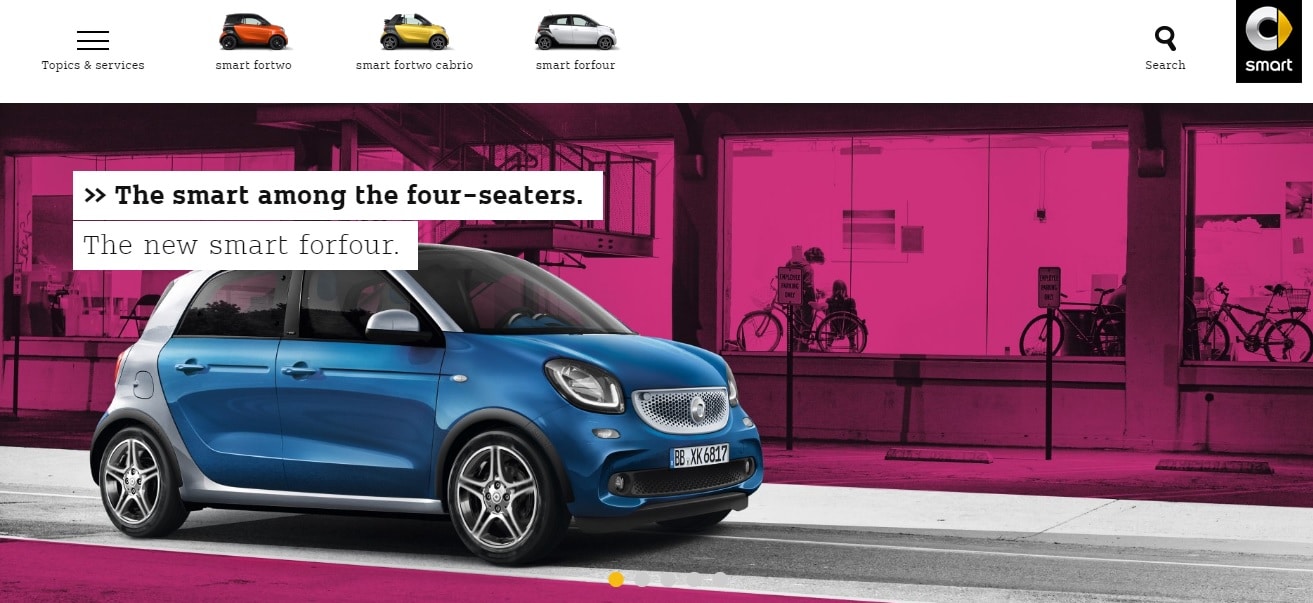
Smart Cars started by selling themselves on their fuel efficiency, and it worked well, but many people had a problem with how safe Smart Cars were because they were/are so small.
Smart followed their fuel efficiency campaigns with a series of online videos showing the car being hit with a wrecking ball while people were in it. They continued to make sales, and the company was doing fine.
However, in the background, the popularity of their four-seater cars was slowly growing. It was only in 2015, when the company started adding meaty content about their four-seaters on their website, on guest posts, and on social media posts. Their new four-seater cars are now selling almost as well as their two-seater cars. Sales of the four-seaters are dwarfing the sales of their Smart Electric cars, and Smart are pouring far more money into marketing their electric cars than they are their other models.
The four-seaters are not doing as well as they are because of PPC marketing because most of Smart’s PPC adverts are for their two-seaters and their electric cars. It is Smarts SEO efforts/web content efforts, and the car’s online reputation that are selling their four-seater cars.
Why Does SEO Cost More In The Long Term?
Working out the ROI for PPC is very easy. Place your adverts, pay for the clicks, and see how many turn into conversions. Working out the ROI for your SEO is very difficult. Can you be sure why your Google search engine result place jumped up two pages today? Was it the update you did to improve page speeds, was it the several guest posts you wrote last week, was it that linked post on Google+ that went viral?
It is common business sense to invest money into things that work and to phase out the things that don’t, but you cannot be sure which of your SEO elements are generating the most results. In addition, you cannot be sure if the smaller/less popular elements of your SEO are not actually the foundation upon which your current success is based.
For example, those comments and links you placed on a forum may generate few page views, but they may have drawn the attention of online bloggers and influencers who are linking to and talking about your website. Less time spent on your (seemingly unfruitful) forum posting may actually have a long-term knock on effect that severely damages the popularity and search engine ranking of your website.
How Does ROI Affect How Much Your SEO Costs Long Term?
SEO costs more because you cannot be sure in which direction you should put your resources. You could say that any investment in content on your website is money well spent, but some websites simply do not require lots of written content or media.
When you pay for clicks, you pay for the traffic you receive. When you invest in SEO, you may be paying for nothing. Even if you write your own content and create your own social media posts, you are still using your time and effort, which you could have spent working for real money. Your time has a monetary value, and the more time you spend on SEO, then the more money you are spending.
SEO also requires frequent maintenance. You cannot spend weeks working on your website and your off-page SEO, and then abandon it for a few months while you do other things. Your social media influence will quickly dissipate, and your search engine prominence will slowly slip away until your traffic numbers are negligible. SEO requires a long-term and persistent investment, whereas PPC is more like a faucet that you turn on and off when needed.

Is Guest Posting The Way To Go?
Use Pay Per Click advertising, and you can have adverts for your website seen on a wide variety of websites, search engines, and apps. However, there is a way of pulling traffic from other websites without paying for clicks. That method, as you already know, is called “Guest Posting.”
You can write guest posts, which will cost you time and money to write but may also add trickle traffic from another website that continues on over a number of months or even years.
Finding new websites to post guest posts can be tricky. Having to contact website after website to see if it is amenable is frustrating and time-consuming. Still, you will be surprised how many websites are actually calling out for people to write guest posts on their websites. Look for directories and websites with lists of guest posts candidates. These are websites that give away (or sell) lists of other websites that are happy to accept guest posts. You don’t have to sell the idea of a guest post to a website that is already asking for them.
Which Method Has The Most Reach?
SEO obviously has the biggest, broadest and largest reach. An affiliate advertising company’s reach is limited by the number of people/companies/websites and search engines it has signed up.
Even Google’s affiliate advertising network Google Adwords has a limited reach. You could potentially add a guest post to every website that appears in the top ten results of Google search. Whereas, you cannot guarantee one of your Google Adwords adverts will appear in the top ten results of Google’s search engine results. In fact, if you have a low marketing budget, your reach on Google Adsense/Adwords will be limited even further because other company’s adverts will appear before you.
It is true that your competitor’s SEO will be pushing back and therefore affect your SEO efforts, but with PPC, your competitors with the biggest budget get to reign supreme.
You may say the same thing happens with search engine marketing. You could say that Amazon appears at the top hundreds of thousands of products. They have the biggest budget, and they appear at the top of the search engine results more than any eCommerce website. Yet, consider all the products where Amazon doesn’t appear at the top. Companies with far smaller marketing budgets are able to pip Amazon to the post on search engines because the website with the biggest marketing budget doesn’t always win on Google.
Dabbling On The Darker Side Of The Topic
Most other articles on this subject will give you tip after tip on how to use PPC and how to rank up the search engine results, but the fact is that you probably already know more than the writers who wrote those articles!!!
Time and experience will teach you more than these types of articles. We have all had our surprising moments when dealing with SEO, such as seeing a page go viral just because you shared it on Twitter along with a picture of Kate Upon. Or, when your search engine ranking jumps up dramatically because you optimized your photo images over one weekend.
The aim of this article was not to teach you things you already know. It was to make you think a little harder and longer about where you are putting your marketing and content creation resources. It was also a plea to webmasters to alter and experiment with your PPC & SEO strategy a little more.
We have all had a blog or social media post go viral and then spend weeks trying to replicate its success, just like we have all tried to win the PPC race by offering the highest bid amount, only to spend a bundle without a conversion to show for it. Nobody is suggesting you do the same things again, but some of the best surprises occur after you try something a little different.
About Author:
Robert Morris is a freelance writer and a marketing manager currently working for a writing blog Ask Petersen. He loves writing articles on digital marketing, entrepreneurship, and coaching.

You must be logged in to post a comment.